
AI AUTOMATION · AGENTS · SOFTWARE
MuzaMechanica builds AI agents, automation, and custom software — with machine precision and a human touch.

Four mechanisms.
One soul.
From a single automated report to a full AI-driven platform — one team, one standard, from first sketch to production.
— CAPABILITIES
-
AI Agents
Autonomous agents that research, decide and act across your tools — with a human in the loop where it matters.
- Support agents
- Sales & lead qualification
- Document analysis & extraction
- Knowledge assistants (RAG)
-
Automation
End-to-end workflows that take manual work out of operations, sales and support.
- Workflow & approval automation
- Reporting on autopilot
- Document processing
- RPA for legacy systems
-
Custom Software
Platforms and internal tools built around how your team actually works.
- Internal tools & admin panels
- APIs & backend systems
- CRM / ERP integrations
- Data pipelines & dashboards
-
Apps
Web and mobile products with AI at the core — from first prototype to release.
- Web & mobile apps
- Client portals
- SaaS products
- MVP in 6–8 weeks


Engine room
Cloud & DevOps · 24/7 monitoring & alerts · Security & backups · Support with SLA — so everything we build, and everything you already run, keeps turning.
What the machines
take over.
Every department runs on routine. Here is what it looks like before the mechanism — and after.
— USE CASES

-
Sales
- Before
- Leads are copied into the CRM by hand and called back hours later.
- After
- An agent qualifies, enriches and routes every lead within a minute, with a summary for the manager.
-
Support
- Before
- The same fifty questions, every day, in every channel.
- After
- An agent resolves first-line tickets and hands the rest to a person, with full context.
-
Finance
- Before
- Invoices are retyped from PDFs into accounting.
- After
- Documents are read, checked against contracts and posted automatically.
-
Operations
- Before
- The weekly report eats an analyst’s entire day.
- After
- Reports assemble overnight and land in your messenger by 9:00.
-
HR
- Before
- Onboarding is a pile of forms, accounts and forgotten access.
- After
- Accounts, documents and a personal guide are ready on day one — automatically.
-
Management
- Before
- The numbers live in ten systems, and nobody trusts any of them.
- After
- One live dashboard fed by every source, with an assistant you can ask in plain language.
Not on the list?
Every team has its own routine. Tell us what eats yours.
A mechanism we built
for ourselves.
SeoMatrix is our own AI product, live at seomatrix.ai: a team of 20 AI agents that takes a brief all the way to a published, indexed site, then keeps maintaining it after launch. Same workshop, same standards, running in production.
— FROM OUR WORKSHOP

The routine it replaces
Search growth is weeks of research, writing, linking, publishing and upkeep. And with AI answers now above the links, there is a second front: getting cited by ChatGPT, Perplexity and Google AI Overviews.
What we built
20 agents across 8 layers, each with one job: research and keyword analysis, then writing, editing, internal linking, publishing and QA. 55 skills, 85 operations, one pipeline from brief to live site.
Where people stay in control
5 checkpoints: nothing irreversible happens without the owner’s yes. A budget ceiling stops overspend, and every decision and every dollar goes into a journal.
After launch
An auto-pilot watches rankings, Search Console, backlinks and drift. It applies only safe fixes, within action caps, cool-downs and a budget, and it is controlled from Telegram.
The product around the agents
A customer cabinet with Telegram or email sign-in, card and crypto payments, 50+ free tools, a read API and an MCP server that plugs it into Claude Code or Cursor.
Under the hood
Astro on Cloudflare Workers and R2 · Claude, OpenAI, Gemini and Perplexity APIs · Voyage embeddings · DataForSEO · Search Console · IndexNow · Telegram.
See it running.
The agents, the cabinet and the free tools are live.
One agent is a tool.
A team is a mechanism.
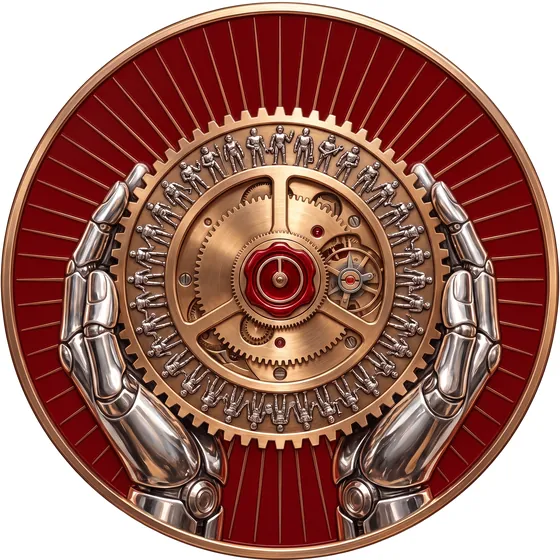
Real work doesn’t fit in one prompt. We design agent teams the way a watchmaker designs a movement: every part has one job, a place in the sequence and a person who signs off. It’s how we’ll build yours.
— AGENT TEAMS
One job per agent
A researcher researches, an editor edits, QA checks. Narrow roles are easier to test, replace and trust.
Layers, not a swarm
Intake, data, analysis, strategy, production, deploy, feedback. Each layer hands the next a result you can inspect.
Checkpoints
The pipeline stops at agreed points and waits for a person. Nothing irreversible happens without your yes.
A budget ceiling
Per-phase estimates and a hard spending cap, so model costs never arrive as a surprise.
A journal of everything
Every decision, action and cost is logged. Runs can be paused, audited and resumed.
Reports where you already are
Alerts and approvals arrive in your messenger or dashboard. The mechanism reports to you, not the other way round.
A SaaS is more
than an app.
Code is one part. A product people pay for also needs accounts, billing, a way to be found and an engine room that never sleeps. We build all of it, end to end. An MVP typically ships in 6–8 weeks.
— SAAS FROM ZERO
The core
The engine your customers pay for: AI agents, data pipelines, the logic that makes it yours.
Cabinet & accounts
Sign-in by email or messenger, projects, reports, roles: the place customers come back to.
Billing
Subscriptions, one-off purchases and top-up balances, with the payment methods your market actually uses.
Growth built in
Free tools, content and search visibility that bring users in, designed into the product rather than bolted on later.
Open to other machines
A public API, webhooks and an MCP server, so your customers’ tools and AI agents can work with your product directly.
Engine room
Edge hosting, monitoring and alerts, security, backups and support with an SLA, so it keeps turning after launch.
How the mechanism is built
Each stage ends in a result you can see, test and sign off on. An MVP typically ships in 6–8 weeks.
— PROCESS
-
2–3 weeks
Discover
We map your processes and find where machines free people the most.
Result: a map of your routine, what it costs in hours and money, and a fixed estimate for the build.
-
2–4 weeks
Engineer
Agents, integrations and interfaces — assembled and tested part by part.
Result: a working prototype on your real data, tested in daily work.
-
4–12 weeks
Deploy
Into your real stack, with monitoring from day one.
Result: hardened, secured and documented. Your team is trained, the old routine switched off.
-
Ongoing
Tune
We keep calibrating as your business and the models evolve.
Result: monitoring, improvements and a growing list of what the mechanism handles.



Ways to start
Start small. Keep what you get.
No big-bang contracts. Each format ends in something you can see, test and keep, and you decide whether to go further.
-
Audit
2–3 weeksStep 01 on its own. You keep the map of your routine, what it costs in hours and money, and a fixed estimate for the build.
-
Build
MVP in 6–8 weeksSteps 02–03 as one project. Fixed scope per stage; code, models and documentation are yours.
-
Run
OngoingStep 04, kept running: cloud and DevOps, 24/7 monitoring and alerts, security, backups and support with an SLA.



Built to tolerance.
Four rules every mechanism must pass before it leaves the workshop. Written into every contract.
— STANDARDS
-
Your code, your IP
Source, models and documentation belong to you. No lock-in, no hostage situations.
-
Human in the loop
Agents act within clear limits. Critical decisions always go to a person, and every action is logged.
-
Security by default
Your data stays inside your perimeter. Models that must never leave your servers run on-premise.
-
Honest estimates
Fixed scope per stage, measurable results — and a straight answer when something shouldn’t be automated at all.




Toolset
What our mechanisms are built from.
- Claude
- OpenAI
- Gemini
- Perplexity
- Voyage
- LLMs
- RAG
- LangChain
- Local LLM
- Ollama
- Python
- FastAPI
- TypeScript
- Go
- Node.js
- React
- Astro
- PostgreSQL
- REST / GraphQL
- Docker
- Kubernetes
- Cloudflare Workers
- Cloudflare R2
- n8n
- Airflow
- Telegram bots
Every mechanism we build is measured by one thing: does it make people’s work more human?
Fair questions.
Straight answers.
The short version on time, cost, data and ownership.
— FAQ
How soon will something actually work?
A week to map your routine, 1–2 more for the blueprint and a fixed estimate. A working prototype on your real data follows in 2–4 weeks; an MVP typically ships in 6–8 weeks.
How is the work priced?
Fixed scope per stage, with a fixed estimate before the build begins. If something isn’t worth automating, we say so up front.
Will it work with the systems we already use?
Yes. We connect CRM, ERP, accounting, messengers and spreadsheets into one working mechanism, and reach legacy systems through RPA.
Can the models run on our own servers?
Yes. Your data stays inside your perimeter; when models must never leave your servers, we deploy them on-premise.
Who owns the result?
You do: source code, models and documentation. No lock-in.
What happens after launch?
We monitor, improve and extend: cloud and DevOps, 24/7 monitoring and alerts, security, backups and support with an SLA. The list of what the mechanism handles keeps growing.
What would a machine
take over in your team?
Pick a department and a routine. See what the mechanism would do, where a person stays in the loop, and what that routine costs you, by your own numbers.
— SKETCH YOUR MECHANISM
IIIThe mechanism
Choose a routine to see what the mechanism would do.
- What it does
- Where a person stays in charge
Calculated in your browser. Nothing is sent until you submit the form below.

Reply within one working day
Let’s build your mechanism.
Tell us what eats your team’s time. You get questions, a first idea and an honest view of whether automation is worth it.
- Email [email protected]
- Telegram @muzamechanica